Picture
What has Lang Lang been smoking?
Year-end lists are all the rage these days: at this time of the year, many a critic pauses to contemplate “the ten best recordings of 2011,” or some similar subject. Here’s my own contribution to this burgeoning genre of criticism, based on my observations in 2011.

Most Ridiculous CD Cover

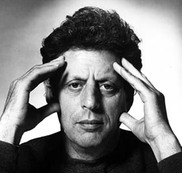
Lang Lang and his handlers obviously wanted to make a strong impression, in the bicentennial year of Franz Liszt’s birth. But who came up with this utter nonsense, and called it art? It looks like the celebrated Chinese pianist is stoned on some kind of orange hallucinogenic drug.
 
 
Picture
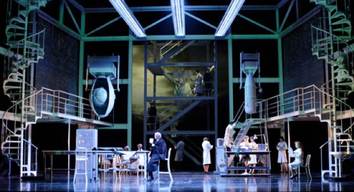
The Met's set for Faust looks like a hazardous place.
The good news is that mezzo Wendy White was not seriously injured on Saturday when a piece of scenery at the Metropolitan Opera’s Faust collapsed, causing her to fall eight feet. But it’s a reminder that opera can be a dangerous line of work.

A brief search around the internet revealed that operatic injuries are not uncommon.
And they can sometimes be quite serious.


Picture
Taurins led Tafelmusik's Messiah.
I wrote this review for Toronto’s Globe and Mail. It appeared in yesterday’s newspaper.

There must be a zillion recordings of Messiah in the world – and soon there will be a zillion and one. Currently, Tafelmusik Baroque Orchestra and Choir are recording George Frideric Handel’s popular masterpiece for release next year.

Wednesday night’s Messiah was the first of four performances that Tafelmusik is giving this week, both as public concerts and recording sessions. And this double-duty approach seems to be having a palpable effect on the results.


Picture
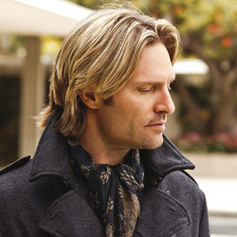
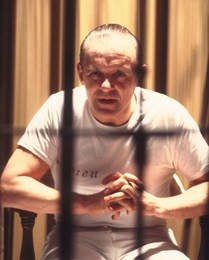
Hannibal Lecter likes his Bach.
It’s a well-known fact that Hannibal Lecter is so twisted and depraved that he actually enjoys classical music. But now comes news – via the ever-informative Norman Lebrecht – that the actor Anthony Hopkins, who brought Lecter to the screen, is himself a composer.

He’s just had a concert of his works – played by the City of Birmingham Symphony Orchestra, no less. And although I’ve never heard a note of his music, I’m prepared to make a bold prediction about its critical reception: no matter what it sounds like, it won’t be taken very seriously. Anthony Hopkins can do a lot of things – but he cannot make a name for himself as a composer. He is simply too well known as an actor for the world to think of him as anything else.


Picture
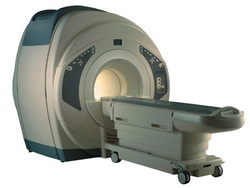
MRI scanner: a bargain at $1 million.
Over on The Gramophone’s website, there’s a fine blog by Jeremy Nicholas about musical tastes (here) – and about how many people are wary of admitting that they dislike any composer or work considered “important.”

He expresses a kind of bemused fascination with people who appear to like everything – especially radio announcers, whose job it is to like everything they play – while ever-so-gently calling into question the sincerity of their expressed views.


Picture
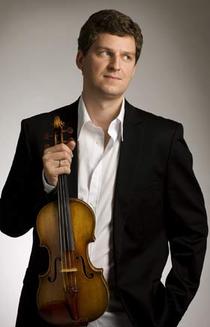
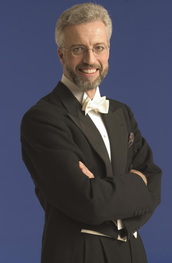
Ehnes takes his Tchaikovsky seriously.
Here’s my review, from today’s Globe and Mail, of Canadian violinist James Ehnes with the TSO.

On Thursday evening, the Toronto Symphony Orchestra and music director Peter Oundjian played Tchaikovsky, Tchaikovsky and more Tchaikovsky.

Such a concert carries with it the temptations of emotional excess – of wallowing in romantic extravagance and artistic indulgence. Yet that’s certainly not how events unfolded, for a variety of reasons.

The most obvious reason was James Ehnes, on hand at Roy Thomson Hall to play Tchaikovsky’s Violin Concerto.


Picture
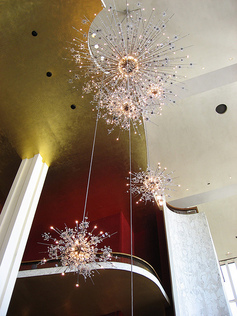
Stardom beckons at the Metropolitan Opera.
Here’s something I recently wrote for Toronto’s Globe and Mail that appeared in print yesterday.

In a college auditorium in Buffalo, the scene is set for the district finals of the annual Metropolitan Opera National Council Auditions. Three distinguished judges and nearly 50 young singers are ready to get started. A clutch of hard-core opera fans sits in the audience; a well-worn baby grand piano sits on the stage. Off to one side stands the American flag.

But the flag might as well be that red-and-white one with the maple leaf: Most of the contestants here are Canadians. From British Columbia to Nova Scotia, they came to Buffalo last Saturday for a shot at the big time. Although a third to a half of contestants always come from Canada, says Dianne Rubin, one of the volunteer organizers, “This year, we have a larger percentage of Canadians than usual.”


Picture
Whitacre and others are changing new music.
Here’s something I wrote for today’s Houston Chronicle.

A bum rap is a hard thing to beat. That’s the problem “contemporary classical” music faces today, thanks to the audience-unfriendly composers of the post-World War II decades.

But those composers – Karlheinz Stockhausen, Pierre Boulez, Milton Babbitt and many others – who did such a fine job of alienating audiences half a century ago, have pretty much faded from the scene. More and more, composers today are writing with a sympathetic understanding of what people really want to hear.


Picture
Inspiration for a new opera?
Here’s a YouTube video of the Occupy Wall Street protest at Lincoln Center protest just after a performance of Philip Glass’s opera Satyagraha at the Met on December 1. After the performance, Glass, in a show of solidarity, addressed the crowd.

I’m glad I wasn’t there – not because I disapprove of the OWS movement, but because the “human microphone” thing they do doesn’t seem to work very well. It’s hard to make out much of what Glass is saying.


Picture
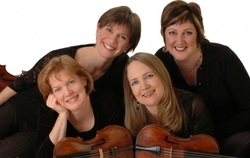
The Lafayette Quartet: together for 25 years.
Today, over in the “Writing about music” section of my website, I posted a lengthy article that I wrote for last month’s Strad magazine about the Lafayette String Quartet. (You’ll find it here.)

I had the pleasure of meeting with the Victoria, British Columbia-based quartet this summer at the Festival of the Sound, in Parry Sound, Ontario. The four women in the quartet – violinists Ann Elliott-Goldschmid and Sharon Stanis, violist Joanna Hood and cellist Pamela Highbaugh Aloni – have now been playing together for a quarter-century, with no changes in personnel. That’s pretty impressive!