What will the courts make of Currier vs. the Brooklyn Phil? I’ve written before about how the classical music world aspires to a state of “pristine issuelessness.” Dubious deals are hidden from view, scandals are swept under the rug, conflicts are smoothed over – and whatever the problem may be, everyone agrees it’s best not to talk about it.
The whole machinery runs like an exercise in Palestrina counterpoint: carefully regulated to avoid any kind of discord. (And then everyone wonders why classical music doesn’t get more attention in the media!)
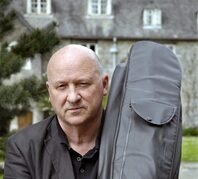
But here’s a can of worms that that has completely lost its lid. We learn from WQXR radio’s website that New York’s Supreme Court has agreed to consider a lawsuit brought upon the Brooklyn Philharmonic Orchestra by composer Nathan Currier. Apparently, back in 2004, the orchestra cut short the world premiere of his Gaian Variations so as not to have to pay its players overtime. Currier had paid the Brooklyn Phil $72,000 out of his own pocket to perform the piece, and wasn’t very happy when it was brought to a halt before the finale. (You can read more about the lawsuit here.)I’m reminded of an old saying: “Don’t get in a fight with a skunk.” You might win the fight, but you won’t come out of it smelling very nice. However, in this case, it seems that neither side will emerge with a pretty scent.
It’s considered no dishonour for an orchestra rents itself out for recording purposes. (The London Symphony Orchestra often does it.) But to do so in a concert performance is considered an embarrassment, and a dubious first step on a slippery slope. The Brooklyn Phil appears willing to sell its artistic integrity to the highest bidder.
And for a composer to sue an orchestra that has presented his music badly or wrongly – especially if he hired the ensemble – looks like a self-inflicted wound. What composer wants to be seen to be buying his or her progress in the musical world? And other orchestras might think twice about performing Currier’s music, now that they see the lengths he’ll go to settle the score (so to speak) if he’s unhappy with the results.
At present, the case raises some very obvious and specific questions. How did the issue of the work’s duration go unresolved until the time of its premiere? Why did the Brooklyn Phil not abide by the last-minute cuts made by the composer?But beyond these nuts-and-bolts matters, the conflict sheds light on some larger concerns – that may or may not be answered as this case draws on. How common is it for composers to hire orchestras to perform their music? Why, exactly, is this practice considered shameful? Is there any way to go about it that would make it more respectable? Or is this a road that neither performers nor composers should ever venture down?
And, at the bottom of it all lie even more fundamental questions. Has the relationship between composers and orchestras become so strained nowadays that what ought to be a common artistic goal – the performance of a world premiere – can easily descend into an adversarial relationship? What are a composer’s and an orchestra’s “good faith” obligations to each other when they are working together – regardless of the financial arrangements?
Personally, I suspect that both Currier and the Brooklyn Phil made the mistake of entering into an agreement in which each, deep down, felt “used” by the other. No good can come from that sort of thing.
You can hear a brief excerpt from Currier’s Gaian Variations online. (Go here, click on “samples,” and scroll down till you find it.)© 2013 Colin Eatock
The diploma and funny hat make it official. Every now and then, I write on a topic not directly related to music. I wrote this essay – originally titled “A North American’s Guide to the Use and Abuse of the Modern PhD” – for the website 3 Quarks Daily, where it was posted on May 13, 2013.
You applied to the program, and you got in. Then you spent the next four, six, eight or more years stroking the capricious egos of professors, jockeying for position within your peer group and marking bad undergraduate essays for the minimum wage. You completed the research, the grant applications, the writing, the comprehensive exams, and finally the defence.
These nuns are up to the challenge. (photo: Michael Cooper) On Saturday night, I was at the Four Seasons Centre last night to see the Canadian Opera Company’s current staging of Poulenc’s Dialogues of the Carmelites. Directed by and designed by Canadians Robert Carsen and Michael Levine (respectively), it’s a thought-provoking production. And one of the many things I found myself thinking about, as I left the theatre, was the term “production values.”
The phrase is much bandied-about in the opera world. Often, it simply means that a lot of money was conspicuously spent. In this sense, “high production values” is an economic term, referring to the use of expensive scenery, costumes, lighting and stage equipment.
Pianist Janina Fialkowska. Here’s my interview with pianist Janina Fialkowska, from the Houston Chronicle.
When Janina Fialkowska returns to Jones Hall on Thursday to perform with the Houston Symphony, she’ll walk to center stage, sit down at the piano and play Frédéric Chopin’s Piano Concerto No. 2 – with both hands.
That may sound like an odd thing to say. But anyone who heard her last Houston Symphony appearance, in 2002, will recall that on that occasion she played with one hand only. The piece was Maurice Ravel’s Piano Concerto for the Left Hand, but Fialkowska played it with the only good hand she had – her right.
James Ehnes, Russell Braun and Carolyn Maule. In many ways, the decision by the Women’s Musical Club of Toronto to pair up violinist James Ehnes and baritone Russell Braun in a joint recital was a stroke of genius.
Both are among the best Canadian artists currently before the public. As well, they share stylistic affinities: an unaffected, no-nonsense approach to interpretation that doesn’t shortchange depth, drama or virtuosity. Adding pianist Carolyn Maule (Braun’s wife) to this duo created a potent little chamber ensemble for a Thursday afternoon concert at Toronto’s Koerner Hall.
 Salome gets her wish. The opportunity to revisit an old friend is one of life’s most gratifying pleasures. And even if the friend in question is brutal, depraved and horrifying – well, a friend is still a friend, right?
I’m talking about the Canadian Opera Company’s revival of Atom Egoyan’s production of Salome, which I saw on Saturday (April 27) afternoon at Toronto’s Four Seasons Centre.
 Alam Khan, with his sarod. Houston’s WorldFest film festival recently presented the documentary Play Like a Lion. In advance of the screening I interviewed the director, Joshua Dylan Mellars, for the Houston Chronicle.
“When I’m nervous,” the musician Alam Khan says, “I remember what my father always says: to just enjoy the music and be free. Play like a lion.”
 Lucia and Enrico share a tender family moment. (photo: Chris Hutcheson) Canadian Opera Company’s current production of Gaetano Donizetti’s Lucia di Lammermoor at Toronto’s Four Seasons Centre has plenty going for it: a fine cast, effective pacing from conductor Stephen Lord, and intriguing stage direction from David Alden.
But let’s start with the glass harmonica.
In case you don’t know the instrument, it consists of a set of partially submerged glass bowls rotating on an axle that produce sustained tones when touched by the fingers. Developed by Benjamin Franklin, the glass harmonica was to the 18th and 19th centuries what the theremin was to the 20th: a weirdly ethereal novelty instrument. Its decline from fashion was hastened by the rumour that its sound induced insanity.
 The CSO has extended Anna Clyne's contract. (Smart people!) I haven’t posted one of these “New Music I Like” blogs in a little while. But rest assured, gentle readers, I have been vigilant on your behalf – following up internet clues wherever they might lead.
When I received a press release from the Chicago Symphony Orchestra announcing that Anna Clyne, one of two young composers-in-residence with the CSO, is having her contract extended, I promptly investigated. I’d never heard of Clyne before, so I turned to YouTube – and found some impressive music. While I can’t say I enjoyed everything I heard equally, I can only agree with conductor Riccardo Muti’s assessment that she is “an artist who writes from the heart.”
 Simon Capet strikes up the band. There’s always a mixture of emotions in the air when a new ensemble is officially launched. Eagerness, optimism, curiosity and even a touch of skepticism occupy the same space simultaneously.
And so it was at the Lula Lounge last night when Euphonia – a chamber orchestra assembled by conductor Simon Capet – stepped out for their first public performance.
As some readers may be aware, the Lula Lounge is a funky club in downtown Toronto that’s best known for its adventurous world music programming. Western classical music hasn’t had a large presence in the past – so Capet’s ambitious announcement that his orchestra would play there on a regular basis came as a pleasant surprise.
|